Atlantic Hurricane Season 2024: Essential Guide for Roofing Sales Teams
Brent Bird
As the 2024 Atlantic hurricane season intensifies, roofing sales teams in hurricane-prone areas must gear up for the challenges ahead. With NOAA predicting an 85% chance of above-normal activity, it’s crucial to prepare for an influx of demand.
Our comprehensive guide, “Hurricane Season 2024: Essential Guide for Roofing Sales Teams,” provides valuable insights and strategies to help your team navigate this critical period. From understanding key data points to leveraging tools like SalesRabbit, this guide equips you with everything you need to succeed. Don’t wait—get ahead of the storm and access the full guide here:
Transform Your Roofing Sales Strategy with the Right Tools
Shawn Jolley
In the roofing industry, success is often determined by how effectively you can manage your sales process. Streamlining operations, boosting sales, and delivering exceptional customer experiences are all critical to staying competitive. Whether you’re targeting new leads or aiming to close deals more efficiently, having a well-defined strategy makes all the difference.
Shift from Manual Processes to a Modern Approach
Many roofing companies still rely on outdated methods—paperwork, manual tracking, and inefficient project management. These processes can lead to missed opportunities, lost leads, and slower growth. To break free from these constraints, it’s essential to adopt a modern, tech-driven approach that aligns with your business goals.
Key Strategic Shifts to Focus On:
Leverage Data for Decision-Making: Use real-time data, like weather reports and demographic insights, to target the most promising leads.
Digitalize Your Sales Process: Move away from paper contracts and embrace digital forms and electronic signatures to speed up your workflow.
Enhance Team Visibility: Implement tools that allow you to monitor and optimize your team’s canvassing efforts, ensuring that every opportunity is seen.
Weather Insights: A Game-Changer for Roofing Sales
In roofing, timing is everything—especially when it comes to weather-related events. By integrating weather data into your sales strategy, you can quickly identify areas affected by storms and offer timely services to homeowners in need. This proactive approach not only boosts your sales but also positions your company as a trusted, responsive service provider.
Modern sales tools are a necessity when it comes to tracking weather events and targeting canvassing efforts to make the most of each lead.
Empower Your Sales Team with Gamification
Motivating your sales team is key to driving performance. By incorporating gamification into your sales strategy, you can tap into competitive instincts and encourage your reps to push harder for better results. This data-driven approach doesn’t just increase sales; it also fosters a culture of continuous improvement within your team.
Learning about the Bartle player types is a great first step toward incorporating gamification.
Optimize Customer Engagement with Digital Contracts
Customers expect convenience and efficiency. By digitalizing your sales process—using custom digital contracts and electronic signatures—you can offer a seamless experience that meets these expectations. This strategy not only speeds up transactions but also reduces the likelihood of errors, ensuring that your deals are closed quickly and accurately.
Target High-Potential Leads with AI and Machine Learning
Understanding your market is crucial, but knowing exactly which customers to target can elevate your strategy to the next level. By leveraging AI and machine learning, you can identify the most promising leads and tailor your sales pitches to meet their specific needs. This approach increases your chances of converting leads into sales and maximizes your return on investment.
Scheduling and Training: The Backbone of a Strong Sales Strategy
Efficient scheduling and ongoing training are often overlooked but are vital to maintaining a productive sales team. A well-organized calendar system that syncs with your sales reps’ schedules ensures that no appointments are missed, while targeted training helps your team stay sharp and adapt to changing market conditions.
Ready to Elevate Your Roofing Sales Strategy?
It’s time to move beyond traditional methods and embrace a strategy that drives results. By integrating these approaches into your sales process, you can position your roofing business for sustained growth and success.
Close More Deals with AI-Powered Sales Coaching: Siro and SalesRabbit Integration
Aleshia Stipanovich
The Sales industry is competitive—and the ability to harness actionable insights from every customer interaction is a game-changer. This is where the powerful integration between SalesRabbit and Siro comes into play, changing the way field sales teams operate and grow. By implementing this tech, sales teams can close more deals with AI-powered sales coaching.
Here’s what you need to know:
The Power of AI and Siro
Siro is designed to record and transcribe face-to-face sales conversations, unlocking potential revenue through its advanced AI capabilities. By capturing these interactions, Siro provides invaluable strategic insights that can drive your sales strategy forward. Siro makes a difference through:
Strategic Insights
Sales leaders can gain a clear understanding of field activities, identifying strengths and areas for improvement.
Skill Enhancement
Sales reps can listen to real examples from top performers, improving their techniques and overall performance.
AI-Identified Coachable Moments
Siro’s AI is trained on field sales conversations, automatically pinpointing moments that offer the greatest coaching opportunities.
Now Integrated with SalesRabbit
The integration between Siro and SalesRabbit brings together the best of both worlds. SalesRabbit’s robust platform, known for its field sales management capabilities, now incorporates Siro’s AI-driven coaching features. This synergy enhances the entire sales process, making it more efficient and effective. Easily use Siro with SalesRabbit by:
Starting a Siro Recording from SalesRabbit
Easily initiate recordings directly from the SalesRabbit interface, ensuring no interaction goes unrecorded.
Auto-Splitting Recordings with D2D Mode
Automatically segment recordings for easy analysis, particularly useful for door-to-door (D2D) sales operations.
Accessing Comprehensive Conversation Records
Every pin in SalesRabbit will now have a detailed record of why deals were won or lost, providing clear and actionable insights.
Achieve More with AI-Powered Insights
With Siro’s integration, SalesRabbit users can expect a significant boost in performance. Here’s how it helps sales teams:
Cut Costs, Grow Revenue
By sharing real examples from top performers, sales teams can reduce high rep churn costs and enhance training efficiency. Reps coached using Siro are able to implement feedback quickly and effectively, leading to higher close rates.
Seamless Setter-Closer Handoff
Review setting conversations to ensure smooth knowledge transfer from appointment setters to closers: perfect for customizable industries like solar sales.
Real-Time Training
Eliminate the bottleneck of infrequent shadowing. With Siro, reps receive daily training based on their actual customer encounters, leading to continuous improvement.
Proven Results
Siro’s AI-powered coaching delivers results. Hawx Pest Control saw a 39% increase in close rates and 20% larger average deals after integrating Siro. The company structured its approach by having half of its team use Siro, while the other half did not, over the course of one summer. The results were clear—Siro users outperformed their counterparts.
What Siro Users Say
“Siro was the key driving tool we used to scale our business from $4M to $12M in one year.” –Paul Maschue, Head of Sales, Rose Roofing and Restoration
“With Siro, you get real-time insights into what’s going on with your sales individuals.” –Sam Taggart, Founder, The D2D Experts
“Siro has delivered the best ROI hands down. I’d highly recommend it for any sales team.” –Cody Shill, Senior VP of Sales, Novo Solar
“With Siro, our reps can be trained every single day on their actual encounter with customers.” –Chase Williams, President of Sales, Aptive Environmental
Siro’s Leadership on the Integration
“We are proud to partner with SalesRabbit to make recording in the field as easy as recording on Zoom. This is the first time anyone has done that. By having a combined record of the conversations themselves and the outcomes, you can finally create a system that’s able to pinpoint why reps win and how to replicate that.” –Joe Jordan, Co-Founder & Co-CEO of Siro
Get Started with Siro and SalesRabbit
The integration of Siro and SalesRabbit is a powerful tool for any field sales team looking to enhance their performance and close more deals. With AI-powered sales coaching, your team can achieve success. Don’t miss out on this opportunity to enhance your sales process.
Explore the benefits of Siro and SalesRabbit today, and coach 10x faster with AI-driven insights.
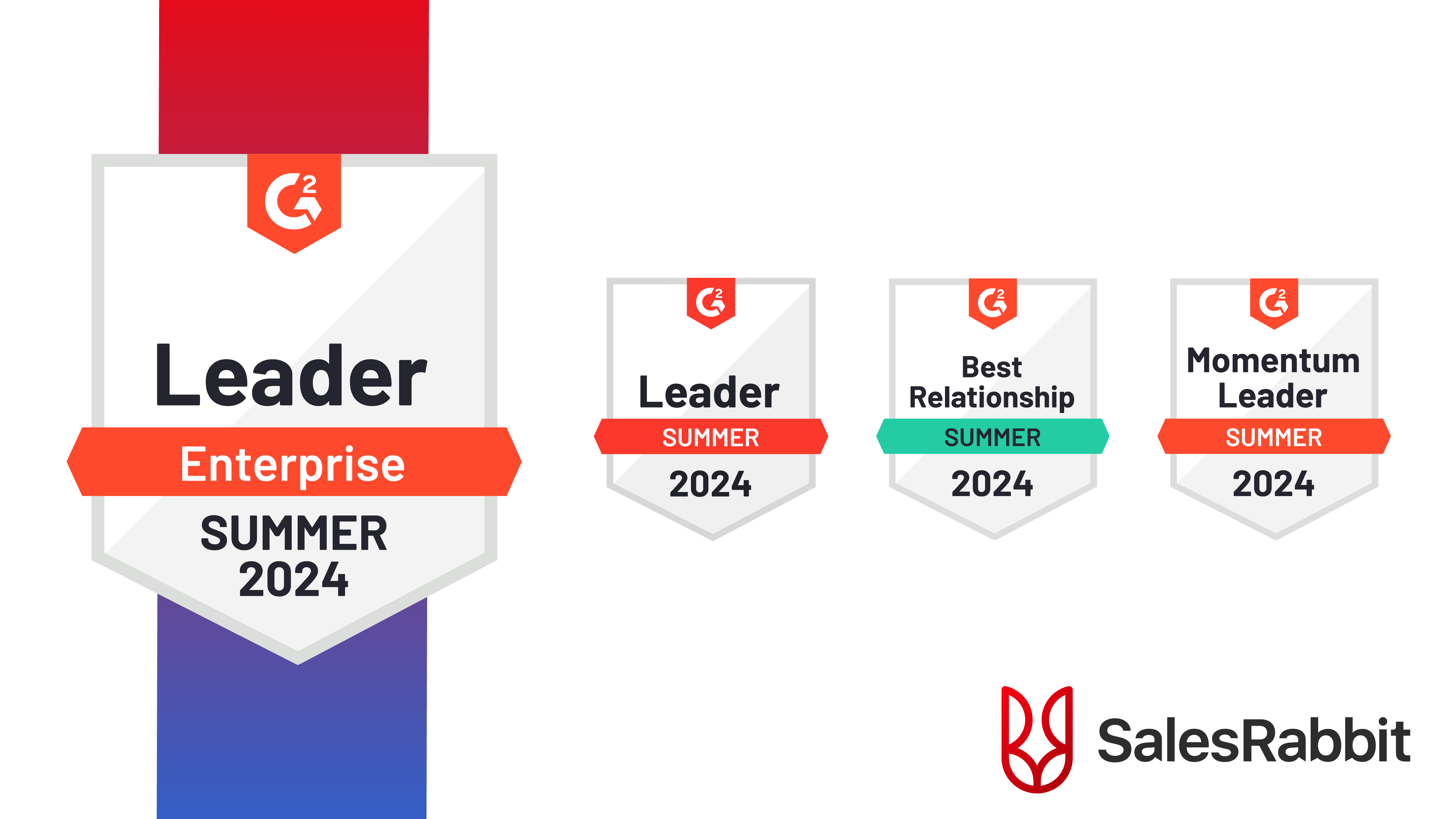
LEHI, UT JULY 2, 2024 – SalesRabbit launched a new Gamification and Analytics solution for field sales ahead of G2 Crowd’s Summer 2024 reports, where the comprehensive platform secured thirty-one awards. This recognition alongside the new product launch solidifies SalesRabbit’s position as the most complete and user-friendly solution on the market for field sales teams.
G2 Crowd, recognized for its authority in the software industry, awarded SalesRabbit a total of thirty-one badges in its Summer 2024 reports. SalesRabbit’s achievement of the #1 leading badge across several field sales categories serves as a significant testament to its steadfast commitment to meeting the evolving needs of sales teams and organizations.
G2 Awarded 31 Badges to SalesRabbit, Including:
#1 Leader in Field Sales Software
#1 Leader for Best Relationship in Field Sales Software
#1 Leader for Location Intelligence
These awards emphasize SalesRabbit’s commitment to user experience and delivering results. The sales platform features nine powerful capabilities, including AI-powered lead scoring and semi-automated sales gamification. All of these tools are seamlessly integrated under a single login, streamlining workflows, enhancing sales efficiency, and driving business success.
In response to the latest report, Sean Huckstep, Chief Sales Officer at SalesRabbit, said, “We are honored to be recognized by G2 Crowd with thirty-one awards. For more than a decade, SalesRabbit has been the trailblazing leader in the door-to-door space, and our launch of Amplify is simply the next natural evolution of the comprehensive platform we have created—bringing engaging, real-time Gamification features and easy-to-use behavioral Analytics to field sales teams who are looking to get a leg up on the competition and retain sales reps longer.”
Visit salesrabbit.com to learn more about the field sales platform’s industry-leading capabilities.
About SalesRabbit
SalesRabbit is the only all-in-one field sales management platform, used by 85 thousand salespeople every day. The SalesRabbit platform has evolved for over a decade to include everything a field sales team needs to succeed, from DataGrid AI buyer scores and territory management to gamification and solar proposals. With SalesRabbit, sales organizations discover they can save money by consolidating several single-point software solutions into one easy-to-use platform with industry-leading support.
About G2 Crowd
G2 Crowd is the largest and most trusted software marketplace, building trust by showcasing the authentic voice of millions of software buyers. More than 80 million people annually—including employees at all Fortune 500 companies—use G2 to make smarter software decisions based on authentic peer reviews. More than 60% of the Forbes Cloud 100 are G2 customers, using it to manage their software spending, grow their business, and ultimately build their reputation.
Ben Nettesheim Chief Marketing Officer contact@salesrabbit.com
SalesRabbit Amplify Brings Field Sales Gamification & Analytics Into One Platform
Zac Kerr
LEHI, UT JUNE 11, 2024 – SalesRabbit is excited to announce its newest product, SalesRabbit Amplify, the most powerful Gamification system for field sales, working in complete harmony with the core SalesRabbit platform. SalesRabbit Amplify stands as the only product on the market that combines advanced Gamification and motivation functionalities with complete field sales management tools, creating a unified and efficient solution for sales teams.
SalesRabbit Amplify is designed to change the way field sales teams operate by seamlessly merging Gamification features with insightful Analytics, together in one platform. This innovative approach not only enhances motivation and engagement among sales reps but also provides managers with deep insights into performance, enabling strategic decision-making.
According to a study by HireDNA, “Organizations with higher than average levels of employee engagement realized 27% higher profits, 50% higher sales, 50% higher customer loyalty levels, and 38% above-average productivity.” This compelling data underscores the significant impact that enhanced rep engagement can have on overall sales team performance.
A SalesRabbit partner case study highlights the tangible benefits of Gamification in field sales. Companies using Amplify features for at least six months saw a 30% increase in KPIs. When running competitions, these companies experienced a 44% increase in sales activities, and overall revenue saw a remarkable 45% year-over-year increase.
By integrating Gamification directly into the platform where sales teams manage their activities, SalesRabbit Amplify offers a seamless and powerful solution. Sales reps are motivated through real-time leaderboards, achievements, and rewards tied to actual sales activities in the field, while managers benefit from a specific view of their team’s performance and engagement.
“SalesRabbit Amplify is the unique and needed solution for motivation for field sales teams,” said Doug Bush, Director of Sales Development at SalesRabbit. “Our unique approach of integrating Gamification and Analytics into the powerful SalesRabbit platform—which teams are using to manage their field sales activities—sets a new standard for the industry, driving engagement, productivity, and ultimately, sales success.”
SalesRabbit is the only all-in-one field sales management platform, used daily by 85,000 salespeople. Created by sales professionals, it offers nine distinct capabilities through a single login, integrating powerful sales tools to streamline fieldwork. SalesRabbit leverages data to identify high-value leads, automates tasks, and provides real-time progress tracking. Its mobile solution empowers on-the-go deal closing, while robust reporting and analytics optimize sales strategies and maximize ROI. SalesRabbit enhances visibility, simplifies operations, and supports informed decision-making, helping your company achieve superior sales performance.
Ben Nettesheim Chief Marketing Officer contact@salesrabbit.com
How to Run a Sales Contest: Ideas and Tools for Success
Shawn Jolley
Sales contests are a proven strategy to boost performance, engage employees, and ultimately drive revenue. When executed effectively, these contests can invigorate your sales team, fostering healthy competition and connection. Here are a few key steps and ideas for running a successful sales contest that’ll help your team remain motivated and focused.
What Is a Sales Contest?
A sales contest is a structured competition designed to motivate and incentivize a sales team to achieve specific business objectives within a defined time frame. By setting clear goals and offering rewards, sales contests foster healthy competition and collaboration among team members. When well-designed, sales contests boost morale, drive productivity, and ultimately enhance overall sales performance.
9 Steps for Running a Sales Contest
Step 1: Start by Defining Clear Objectives
The foundation of any successful sales contest is a clear set of objectives. Determine what you want to achieve with the contest.
Some examples of what you might want to achieve include:
Increasing sales volume
Improving customer acquisition rates
Boosting cross-selling of certain products
Defining these goals will help in designing the contest and setting appropriate benchmarks. Without knowing your objectives, you won’t necessarily be able to run a successful contest.
Step 2: Establish Fair and Achievable Goals
Your sales contest should be challenging but attainable. Take the objectives from step one and set realistic goals that push your team out of their comfort zones without setting them up for failure.
Consider the following when setting goals for sales contests:
Historical Data: Use past performance data to set benchmarks
Market Conditions: Be aware of current market trends and customer behavior
Individual Capabilities: Recognize that your team members have varying strengths
If you’ve never run a sales contest before, you may need to experiment a few times before you land on objectives and goals that work for you and your team.
Step 3: Design Engaging and Varied Contests
Doing the same thing over and over again can dampen enthusiasm, so keep the contests varied and engaging. This is especially important if your contests always produce the same winners.
Various sales contest ideas include:
Leaderboards: Foster competition by displaying real-time rankings
Team Competitions: Encourage collaboration with team-based contests
Daily or Weekly Challenges: Keep the momentum going with short-term goals
Theme-Based Contests: Align contests with seasons, holidays, or company events
Coming up with new ideas for contests can be made easier by using gamification and analytics tools designed for outside and field sales teams.
Step 4: Utilize Effective Tools for Running Sales Contests
To manage a sales contest efficiently, leverage technology that can streamline processes and provide insightful data. Software solutions that automate much of the overhead of planning and running contests can be beneficial for a number of reasons.
Consider software tools that offer:
Real-Time Tracking: Keep participants updated with their progress
Data Analytics: Analyze metrics to identify trends and areas for improvement
Communication: Participants can communicate, share tips, and celebrate wins
Gamification Features: Elements such as badges, points, and rewards
If you plan, set up, and run a sales contest without the proper tools, engagement can suffer alongside the results you want to see. Salespeople need to be able to participate easily.
Step 5: Communicate Clearly and Frequently
Transparent communication is vital for maintaining momentum. From the launch to the end of the contest, ensure that all participants understand the rules, goals, and rewards.
Regular updates on progress and standings can keep the competitive spirit alive. Use multiple communication channels to reach your team, such as emails, internal messaging platforms, and meetings. If you use a tool for sales contests, make sure it promotes strong communication.
Step 6: Offer Meaningful Rewards
Incentives are a critical component of any sales contest. Tailor rewards to what truly motivates your team. And remember, different people have different motivations. Consider a mix of:
Monetary Rewards: Cash bonuses or commission boosts
Experiential Rewards: Trips, tickets to events, or exclusive experiences
Recognition: Public acknowledgment of achievements during team meetings
Both intrinsic and extrinsic motivators are important for running a successful sales contest. If you include both in each contest you run, you’re sure to have higher engagement rates.
Step 7: Monitor and Evaluate the Contest
Throughout the contest, keep a close eye on progress and be ready to make adjustments if necessary. This is because things may change when plans meet reality. If your sales contest is too inflexible from the get-go, then it’ll be difficult to adapt when necessary.
And after the contest concludes, be sure to conduct a thorough evaluation to assess what worked and what didn’t. Gather feedback from participants to gain insights into their experiences and suggestions for future contests. Using a sales platform that automatically collects data about each sales contest you run is a great way to accomplish this crucial step.
Step 8: Celebrate Successes
Recognition is as important as the reward itself. Celebrate the achievements of your sales team, both big and small. Highlight top performers and acknowledge everyone’s effort. This not only boosts morale but also sets a positive tone for future contests.
If a contest doesn’t perform as well as you’d hoped or you receive more negative feedback than positive, be open about that, too. Every contest you run can help you improve for the next one.
Step 9: Foster a Culture of Continuous Improvement
Sales contests should be more than a one-off event. Use the insights gained from each contest to refine your approach. Foster a culture of continuous improvement by encouraging your team to set personal goals and strive for ongoing development.
By holding semi-frequent contests that are both varied and engaging for every member of the sales team, you can boost the bottom line while also positively impacting turnover and even customer experience.
Make Gamification and Analytics Easy with Amplify
A well-structured sales contest can be a powerful tool to enhance productivity, drive sales, and build a dynamic team environment. By defining clear objectives, setting achievable goals, using effective tools, and maintaining robust communication, you can run a sales contest that not only meets but exceeds your expectations.
Sales Motivation: 11 Strategies for Igniting the Flame and Keeping It Going
Sean Huckstep
The fire of sales motivation burns brightly in the hearts of new recruits. They see the potential for success, the thrill of the chase, and the satisfaction of helping others. But over time, that flame can flicker and fade. Rejection stings, targets seem insurmountable, and the daily grind can wear down even the most resilient salesperson.
So, how do you reignite the passion within? How do you transform the “just another day” mentality into a relentless pursuit of excellence? The answer lies not in a one-time fix, but in cultivating a culture of self-motivation that fuels your journey to success, day in and day out.
How do you stay motivated? Here are eleven tried and true strategies for sales motivation:
1 Find the Why by Connecting Your Work to Purpose
The most successful salespeople aren’t just driven by commissions or quotas. They understand the deeper impact of their work. They see how their product or service solves problems, improves lives, and contributes to the company’s mission. This sense of purpose fuels their drive and allows them to connect with customers on a deeper level.
Start by reflecting on your “why.” What excites you about your product? How does it benefit the lives of your customers? Imagine the positive ripple effect of your sales efforts. Perhaps you’re selling educational software that empowers children, or medical equipment that improves patient outcomes. Visualize the impact you’re making with every successful sale. This connection to a greater purpose will add a layer of meaning to your daily tasks.
2 Embrace the Challenge by Transforming Rejection into Resilience
Rejection is an inevitable part of the sales game. But instead of letting it discourage you, view it as a learning experience. Every “no” holds valuable information. Was it a bad fit? Did you miss a key pain point? Analyze the situation and use it to refine your approach.
Develop a thick skin. Rejection doesn’t define you or your skills. It simply means you haven’t found the right match yet. The most successful salespeople view rejection as a stepping stone to success, not a dead end. Failure isn’t a dead-end unless you never try again.
3 Cultivate an Optimistic Mindset through the Power of Positivity
A positive attitude is a salesperson’s secret weapon. It fosters confidence, allows you to bounce back from setbacks, and helps you connect with customers on a more approachable level.
Start your day with affirmations. Remind yourself of your skills, your successes, and your goals. Focus on the positive aspects of your job: the stimulating interactions, the intellectual challenges, and the satisfaction of closing a deal. Surround yourself with positive people, listen to motivational podcasts, and read inspiring stories of sales success. A positive mindset breeds positive outcomes.
4 Celebrating the Journey by Recognizing Milestones and Achievements
The path to sales success is paved with small victories. It’s not just about the big deals; it’s about the consistent effort, the daily calls, the presentations delivered, and the relationships built. Celebrate these milestones, big and small. Acknowledge your progress, reward yourself for your achievements, and keep the momentum going.
Public recognition by your manager or team can be a powerful motivator. However, intrinsic motivation is key. Learn to recognize your own accomplishments and take pride in your hard work.
5 Continuously Learn and Evolve to Sharpen Your Saw
The sales landscape is constantly evolving. New technologies emerge, customer needs change, and the competition never sleeps. To stay ahead of the curve, you need to be a lifelong learner.
Dedicate time each day or week to hone your skills. Read industry publications, take online courses, attend sales conferences, and practice your sales pitch. Learn from your peers, observe successful salespeople, and don’t be afraid to experiment with new techniques. A commitment to continuous learning will keep you sharp and adaptable in this ever-changing environment.
6 Build Your Support System by Finding Mentorship and Camaraderie
Sales can be a lonely profession, filled with independent work and self-motivation. However, building a strong support system can make a world of difference.
Seek out a mentor, a more experienced salesperson who can offer guidance, share their wisdom, and help you navigate challenges. Surround yourself with positive and supportive colleagues who can celebrate your victories and offer a listening ear during setbacks. A strong support system provides encouragement, accountability, and a sense of belonging, all of which are crucial for sustained motivation.
7 Reward Yourself by Setting Incentives and Celebrating Success
Let’s not forget the role of external motivators. Commission structures and bonuses can provide a welcome boost, but don’t underestimate the power of setting your own incentives. Reward yourself for achieving milestones, both large and small. Plan a weekend getaway after closing a major deal, treat yourself to a nice dinner for exceeding your call quota, or indulge in a small reward for completing a challenging presentation.
These personal rewards acknowledge your progress and create a positive association with reaching your goals.
8 Develop Your Sales Toolkit to Master the Craft
Beyond motivation, success in sales hinges on having the right tools in your belt. Invest in honing your communication skills. Learn to listen actively, understand customer needs, and tailor your pitch accordingly. Refine your presentation skills to become clear, concise, and engaging. Practice objection-handling techniques to gracefully navigate customer concerns.
Technology is your friend. Embrace CRM tools to manage your sales pipeline efficiently. Utilize social media platforms like LinkedIn to connect with potential customers and build relationships. Explore sales automation tools to streamline repetitive tasks and free up your time for more strategic activities.
9 Build Relationships to Cultivate the Heart of Sales Success
Sales is not about a one-time transaction; it’s about building trust and long-term relationships. People buy from people they like and trust. Focus on understanding your customer’s needs, challenges, and goals. Become a trusted advisor, a resource they can rely on for valuable information and solutions.
Provide exceptional customer service. Go the extra mile to exceed expectations. Respond promptly to inquiries, address concerns efficiently, and follow up consistently. Building strong relationships fosters customer loyalty and repeat business, which is the lifeblood of long-term sales success.
10 Master the Art of Prioritization to Excel at Time Management
Salespeople often juggle multiple tasks and competing priorities. Effective time management is crucial for maximizing productivity and minimizing stress. Develop a daily schedule that allocates time for prospecting, appointments, follow-up activities, and administrative tasks.
Learn to prioritize effectively. Identify the most important tasks that will move the needle toward your goals and tackle those first. Minimize distractions by silencing notifications, setting aside dedicated work times, and avoiding multitasking. Effective time management allows you to leverage every minute of your workday for maximum impact.
11 Take Care of Yourself to Maintain Balance and Well-Being
The relentless pursuit of sales goals can lead to burnout. It’s vital to prioritize your well-being and maintain a healthy work-life balance. Schedule time for activities you enjoy, whether it’s spending time with loved ones, pursuing hobbies, or engaging in physical activity.
Get enough sleep, eat nutritious foods, and manage stress through relaxation techniques like meditation or yoga. A healthy mind and body are essential for sustained motivation and peak performance.
Keep Your Motivational Flame Burning Bright One Day at a Time
Sales motivation is not a one-time fix; it’s an ongoing process.
By embracing the strategies outlined above, you can cultivate a fire within yourself that burns brightly throughout your sales career. Remember, challenges are inevitable, setbacks are temporary, and success awaits those who persevere. The most crucial skill in sales might just be the ability to reignite the flame of motivation within yourself, time and time again.
Improving Sales Performance with SalesRabbit Amplify: Gamification and Analytics
Shawn Jolley
Sales is not just about numbers; it’s about motivation, strategy, and continuous improvement. SalesRabbit Amplify is changing the field sales experience by integrating Gamification and Analytics into one powerful platform. Here’s how SalesRabbit Amplify transforms sales teams and drives success:
Amplify Features
Gamifying the Sales Experience
One of the key features of SalesRabbit Amplify is its Gamification capabilities. By turning the sales activities that reps are already doing day-to-day into a game, Amplify motivates high- and low-performers to achieve more and perform better. Amplify motivates in several ways:
Achievements and Badges
Sales reps can earn badges for various accomplishments, such as reaching sales targets, making a certain number of calls, or closing deals. These achievements are fully customizable, allowing managers to tailor them to their team’s goals and objectives.
Competitions and Battles
Amplify enables managers to create competitions and battles, where reps can go head-to-head with each other. Whether it’s a race to make the most appointments or a challenge to close the most deals, competitions add an element of fun and excitement to the sales process.
XP and Levels
Sales reps can earn XP (experience points) for every achievement and activity they complete. As they accumulate XP, they can level up, unlocking new rewards and benefits. This leveling system keeps reps engaged and motivated to perform at their best.
Coaching and Feedback
Amplify’s coaching module allows managers to schedule one-on-one coaching sessions with their reps. They can track progress, set goals, and provide feedback, helping reps improve their performance over time.
Rewards Store
One of the most creative features of SalesRabbit Amplify is its reward store. Sales reps earn coins for achieving goals and completing activities, which they can then use to purchase rewards of their choice. This customizable reward system ensures that reps are motivated by rewards that matter to them, whether it’s concert tickets, new kicks, or a lunch with the boss.
Using Data-Driven Analytics
In addition to Gamification, SalesRabbit Amplify offers powerful Analytics tools that provide valuable insights into sales performance. Here are some key features:
Real-Time Dashboards
Amplify’s dashboards give managers a real-time view of their team’s performance. They can track metrics such as knocks, conversations, appointments set, and deals closed, allowing them to identify trends and make data-driven decisions.
Insightful Reports
Amplify’s reports module enables managers to create reports based on their specific needs. Whether it’s tracking performance over time or analyzing the effectiveness of a particular campaign, reports provide valuable insights into sales performance.
The Most Powerful Gamification Solution for Field Sales
SalesRabbit Amplify is revolutionizing the field sales experience by combining Gamification and Analytics into one powerful platform. By motivating sales reps, providing valuable insights, and rewarding success, Amplify is helping sales teams achieve their goals and drive success.
Door to door sales continues to be a lucrative path in today’s world. Whether you’re interested in its effectiveness or thinking about getting into it yourself, this guide will give you a complete overview of D2D sales. We’ll cover everything from the core principles to the art of the pitch, exploring the opportunities, challenges, and essential skills needed to succeed.
What Is Door to Door Sales (D2D Sales)?
Door to door sales, a direct sales technique where representatives approach potential customers at their residences or workplaces, remains a robust industry, particularly for select products and services.
Although it may evoke a bygone era, this method still generates substantial revenue, especially for offerings such as solar and roofing services, pest control and security systems, and telecommunications products.
One notable part of door to door sales is its focus on specific neighborhoods. Salespeople target particular areas, visiting homes to deliver sales pitches and engage with residents. This approach allows for personalized interaction.
Is Door to Door Marketing and Selling Effective?
Door to door marketing remains a viable strategy, particularly for products and services that benefit from in-person demonstrations or require local expertise, such as home security systems, solar panels, or pest control.
D2D selling can also effectively target specific demographics that can be challenging to reach online.
One of the key advantages of door to door selling is the opportunity for face-to-face interaction, which allows salespeople to build rapport and address customer concerns directly. This personal touch can lead to higher conversion rates compared to some online marketing methods.
Door to door marketing does come with challenges. It generally has lower conversion rates compared to targeted online marketing, partly due to the unsolicited nature of the contact and the busy schedules of homeowners. Additionally, there is a risk of negative public perception, as some individuals may find door to door sales intrusive or inconvenient.
Regulations regarding door to door solicitations vary by location, and safety is a concern for both salespeople and residents. Adhering to these regulations and ensuring safety protocols are in place are essential considerations for any door to door campaign.
Despite some challenges, the cost of acquisition is low with a relatively high win rate, which makes D2D marketing and selling effective.
Do Door to Door Salespeople Make Money?
The earning potential for door to door salespeople can vary significantly based on several factors. Most D2D sales positions are commission-based, meaning that salespeople earn a percentage of the value of the products or services they sell. This setup can result in high earnings for salespeople who excel at closing deals consistently.
Commission rates can vary widely depending on the company, the specific product or service being sold, and the market conditions. Rates typically range from a low single-digit percentage to over 20% for high-value items.
Some D2D jobs may also offer a base salary in addition to commissions, providing a financial safety net during slower periods.
How a D2D salesperson performs is influenced by various factors, including their sales skills, the popularity and price point of the product or service, and their work ethic. Success in D2D sales is heavily reliant on a salesperson’s ability to connect with potential customers, deliver effective sales pitches, and overcome objections.
Selling high-value items like solar panels can lead to larger commissions.
Work ethic and hours also play a significant role in determining income. D2D sales often requires long hours and persistence, as success is closely tied to the number of doors a salesperson knocks on and the effectiveness of their pitches.
D2D sales can be financially rewarding for those who excel at it, but success hinges on a combination of factors including skills, product or service demand, and effort.
Who Sells Door to Door?
Door to door sales (D2D sales) is utilized by a diverse range of companies and organizations across various industries to reach potential customers directly. One significant category where D2D sales is prominent is home services:
Companies offering security systems, solar panels, roofing or siding repair, lawn care services, and pest control often rely on door to door sales to promote their offerings. These products and services often benefit from in-person demonstrations and personalized interactions, which can be effectively achieved through D2D sales.
Skills Needed for Door to Door Sales Success
To excel in door to door sales, a blend of specific traits, communication finesse, and adept sales strategies is essential. Personality-wise, resilience is key, given the frequent encounters with rejection. The ability to persist and swiftly recover from setbacks is crucial.
Equally important is motivation, as the field demands constant drive to meet targets. Being outgoing is a requisite, as engaging with strangers and forging quick connections is the norm.
In terms of communication, clarity is fundamental. Articulating the product or service in a clear, concise, and compelling manner is essential for customer buy-in. Active listening plays a pivotal role, allowing you to grasp customers’ needs and concerns adeptly.
Persuasion skills are also vital, enabling you to convey the value proposition effectively, highlight benefits, and address objections convincingly.
Sales techniques are pivotal. Thorough knowledge of the product or service is a must, enabling you to field questions and showcase its worth convincingly. Building rapport is critical, as it lays the foundation for trust and eventual sales.
A well-crafted sales pitch is indispensable, serving as a potent tool to capture attention, present offerings persuasively, and secure deals. Equally important is the ability to counter objections confidently and adeptly.
Supplementary skills such as time management are invaluable in door to door sales. Efficiently planning routes, scheduling appointments, and optimizing work time are essential.
Organization is also key, aiding in the management of leads, customer data, and sales records, fostering operational efficiency.
Is Door to Door Sales Hard?
In a nutshell, D2D sales is hard and rewarding.
Door to door sales present a unique set of challenges. Rejection is a constant companion, requiring a resilient spirit and positive mindset to persevere. The demanding schedule, often involving long hours and weekend work, necessitates self-motivation and discipline to maintain productivity.
The unpredictable income, tied to commission-based earnings, adds another layer of challenge, requiring adaptability to fluctuating financial circumstances. The physical demands, including extensive walking, carrying materials, and exposure to various weather conditions, underscore the job’s physically taxing nature.
Safety concerns, stemming from working alone and interacting with strangers, highlight the importance of situational awareness and precautionary measures. Public perception, which can be negative towards D2D salespeople, can present initial barriers to entry and require additional effort to overcome.
Despite these hurdles, there are also potential rewards. The high earning potential, especially for adept salespeople, offers a lucrative opportunity. Flexibility in setting one’s schedule and the sense of accomplishment from succeeding in a demanding role are additional benefits.
Door to door sales can help develop valuable skills such as communication, persuasion, and resilience, which are transferable to various professions. While door to door sales is undeniably challenging, for individuals who thrive on challenges, possess strong communication skills, and are self-motivated, it can offer a fulfilling and potentially lucrative career path.
The Door to Door Sales Approach
Here’s a step-by-step breakdown of the typical stages involved in the D2D sales approach:
Preparation
Begin by thoroughly understanding the product or service you’re selling. This includes being able to confidently explain its features, benefits, and pricing. Research the demographics of the area you’ll be canvassing to ensure your offering aligns with their needs.
Craft a clear, concise, and compelling sales pitch (see next section) that highlights the value proposition of your product. Practice your pitch and how you’ll handle objections to build confidence.
The Approach
When approaching a potential customer, maintain a professional appearance by dressing appropriately and presenting yourself with a smile and eye contact. Introduce yourself and your company, explaining the purpose of your visit.
Ask if the homeowner has a moment to hear about what you’re offering, being respectful of their time and prepared to gracefully move on if they’re not interested.
The Pitch
Focus on the benefits of your product or service rather than just its features. Tailor your pitch to address the specific needs and concerns of the homeowner, demonstrating active listening. Be enthusiastic and confident, as your passion can be contagious and influence the customer’s decision.
Closing the Deal
Present a clear call to action, whether it’s making a purchase, scheduling a consultation, or requesting more information. Be prepared to handle objections effectively with clear and concise responses. Respect the homeowner’s decision, thanking them for their time if they decline.
Following Up
If there’s interest but not an immediate sale, follow up with a phone call, email, or second in-person visit to keep the conversation going. This demonstrates your commitment to customer service and can lead to future sales.
Additional Tips
Always maintain a polite and professional demeanor. Familiarize yourself with local regulations regarding D2D sales and ensure you have any necessary permits or identification. Dress appropriately for the weather and the neighborhood you’re working in. Prioritize safety, especially when working alone, by being aware of your surroundings.
How to Do the Perfect Door to Door Sales Pitch
Understand
Crafting a compelling door to door sales pitch requires a thoughtful approach tailored to your audience. Before you knock, it’s crucial to understand the neighborhood’s demographics and the pain points your product or service can address. Research can help you refine your pitch and increase your chances of success.
Practice
Practice is key. Rehearse your pitch out loud to refine your delivery, timing, and responses to potential objections. Confidence and enthusiasm are essential; your passion for the product can be contagious and positively influence the customer.
Introduce
When you approach a door, smile, make eye contact, and greet the resident by name if possible. Introduce yourself and your company clearly and concisely. State your purpose, explaining how your product or service can benefit them. For example:
“Hi, I’m [Your Name] with [Company Name]. We help homeowners [brief benefit of your product/service].”
Listen
Engage the customer by asking a question to open a dialogue and identify their needs. Listen actively to their response to tailor your pitch accordingly. Focus on the benefits of your product or service, not just the features. Use storytelling to illustrate how your offering can improve their life.
Present
During the presentation, highlight key features that address their needs. Visual aids like brochures, demos, or samples can enhance your explanation. Keep the presentation concise to avoid overwhelming them with information.
Close
When closing, present a clear call to action. Do you want them to buy now, schedule an appointment, or get a free quote? You can also offer a limited-time incentive to encourage action.
Objections
Address any objections with clear and confident responses, and respect their decision. If they decline, thank them for their time and move on graciously.
Behavior
Throughout the interaction, maintain a polite and professional demeanor. Your body language matters, so maintain good posture and friendly conduct. Avoid pushy tactics or misleading information; be genuine and transparent in your approach.
Ending
End with a memorable closing statement that ties back to the initial question or their specific need. By following these steps and personalizing your approach, you can craft a strong door to door sales pitch that resonates with potential customers and increases your chances of making a sale.
Is D2D Sales Worth It?
D2D sales can be a rewarding career choice for those who are highly motivated, resilient, and enjoy challenges. The potential for high earnings, development of valuable skills, and a flexible schedule are enticing aspects. However, it’s essential to consider the demanding nature of the job, including long hours, unpredictable income, and the need to handle rejection.
Success in D2D sales often depends on personal qualities such as self-discipline, communication skills, and the ability to bounce back from setbacks. If you thrive in such an environment and are looking for a potentially lucrative career path, D2D sales could be a good fit.
Before diving in, research the company and product you would be representing. Ensure they align with your values and have a good reputation. Consider your long-term career goals as well. If you value stability and predictability over the potential for high earnings, D2D sales may not be the best choice.
Why Am I Struggling in Door to Door Sales?
Let’s break down some common areas that might be contributing to your struggles and explore ways to improve your performance.
Firstly, let’s consider your sales techniques. Your pitch delivery is crucial. Ensure it is clear, concise, and tailored to each customer’s specific needs. Practice overcoming objections with confident responses that address concerns about price, value, or need. When closing the sale, provide a clear call to action and offer a compelling reason for the customer to buy now.
Next, focus on your communication skills. Make a positive first impression by approaching potential customers with a smile, eye contact, and a professional demeanor. Practice active listening to understand the customer’s needs and tailor your pitch accordingly. Remember, your enthusiasm and confidence in the product can be infectious, so present yourself with conviction.
Consider if you’re targeting the right audience. Ensure you’re approaching neighborhoods where there’s a good fit for the product or service you’re selling. Additionally, evaluate your work ethic and time management to ensure you’re putting in the necessary effort and maximizing your time on the job. Follow up with leads to keep the conversation going.
Seek feedback from your manager or colleagues to improve your pitch and delivery. Practice role-playing with a partner to refine your communication skills. Track your results to identify what’s working and what isn’t. Stay positive, as rejection is part of the job, and focus on learning from each interaction.
Lastly, consider if you truly believe in the product or service you’re selling. Your enthusiasm will be more genuine if you believe in what you’re offering. Get the support you need from your company through proper training and mentorship.
How Do I Become a Door to Door Sales Professional?
To become a successful door to door salesperson (D2D salesperson), it’s important to follow a structured approach.
Begin by researching the industry to understand the products or services typically sold, the necessary skills, and the work environment.
Look for reputable companies in your area that hire D2D salespeople, and investigate their products, commission structures, and training programs.
Next, start looking for a D2D sales job. Check company websites, job boards, temp agencies, and network with people who might have relevant connections. Prepare a resume and cover letter that emphasize your sales skills and experience, even if they’re not specific to D2D sales.
During the application process, be ready to discuss your sales experience, communication skills, and ability to work independently. Show enthusiasm for the product or service you’ll be selling.
Once hired, expect to undergo training provided by the company. This typically covers product knowledge, sales techniques, and the legal aspects of door to door solicitation. You may also be assigned a mentor or shadow an experienced salesperson to learn on the job.
Some additional tips to keep in mind include being prepared to start at an entry-level position, possibly needing your own transportation for the job, and understanding local regulations regarding D2D sales in your area.
Best Times to Go Door to Door
To maximize your door to door selling efforts, it’s crucial to consider various factors that can influence the best times to approach potential customers. Who you’re trying to reach plays a significant role in determining the ideal timing for your visits.
For instance, if your target demographic includes working professionals, early evenings on weekdays (around 5 pm to 8 pm) when they’re likely to be home after work might be most effective.
On the other hand, if you’re targeting stay-at-home parents or retirees, weekdays during the day could be more suitable.
The nature of your products or services also impacts the optimal selling times. For example, if you’re selling security systems, targeting weekdays or evenings when people are typically home might be ideal.
Conversely, if you’re offering lawn care services, weekends or evenings during the warmer months when homeowners are more likely to be outdoors might be more successful.
It’s also essential to consider local customs and regulations regarding solicitation times. Some areas may have restrictions on when you can conduct door to door sales, so it’s crucial to familiarize yourself with these rules before planning your visits.
Avoiding times when people are typically busy, such as lunch hours and nap times, is advisable, as individuals are less likely to be receptive to sales pitches during these times.
It’s important to be weather-aware when planning your door to door sales efforts. Extreme weather conditions, such as hot, cold, or rainy weather, can deter people from answering the door, so it’s best to avoid these times.
Seasonal factors should also be taken into account, with certain products or services being more suitable for specific times of the year. For example, lawn care services might be more appealing in spring or summer, while security systems could be marketed year-round.
Tracking your results is key to refining your approach over time. Pay attention to which times are most successful in your area and adjust your schedule accordingly. Remember, there’s no one-size-fits-all answer when it comes to the best times for door to door selling. It’s essential to be observant, experiment with different times, and tailor your approach to suit your target audience and product.
How to Be Good at Door to Door Sales?
To excel in door to door sales, it’s crucial to possess a blend of personality traits, communication skills, and sales techniques. Resilience is paramount as rejection is common. It’s important to learn from each interaction, develop a thick skin, and quickly bounce back. Motivation is also key; being self-driven and setting ambitious goals will help you push yourself to succeed.
To become a top performer, seek feedback regularly, practice your pitch and objection handling with a partner, and track your results to identify areas for improvement. Maintain a positive attitude and focus on learning and improvement.
When choosing a company, ensure you believe in the product you’re selling. It’s easier to be enthusiastic if you truly believe in what you’re selling. Look for a company with good training programs, mentorship opportunities, and a positive work culture to support your growth.
Success in door to door sales takes time, effort, and continuous improvement. By developing the right skills and mindset, you can turn door to door sales into a rewarding career path.
Building a Sales Team: Create Your Field Sales Force
Sean Huckstep
Do you dream of building a sales team that crushes quotas and exceeds expectations? In the world of business, a high-performing field sales force can be the golden ticket to growth. But building a dream team takes more than just hiring a bunch of salespeople. Here’s what to focus on when crafting a winning sales organization, from hiring strategies to effective team structures.
How To Build a Strong Sales Team
Assess for Skills
Building a strong sales team starts with hiring the right people. It’s not just about finding those with a proven track record of closing deals (although that’s certainly important). You need to identify the specific skills necessary to effectively sell your product or service to your target market. Do your salespeople need to be technical wizards to navigate complex software features, or are they better suited to building rapport and understanding customer needs on a deeper level?
Look for coachable candidates who possess strong communication skills. They should be able to clearly articulate the value proposition of your offering and tailor their pitch to resonate with different customer types.
Relationship-building is also key. Can they build trust and rapport quickly, fostering long-term partnerships with clients?
And lastly, don’t underestimate the value of resilience. The sales game isn’t always easy, and facing rejection is par for the course. Find individuals who are persistent, can bounce back from setbacks, and learn from each interaction.
Address Company Culture
Skills are only half the equation. Company culture is equally important. During the interview process, assess whether the candidate thrives in a collaborative environment. Will they work seamlessly with colleagues to share best practices and support each other in achieving goals? Is a results-oriented mindset evident? Are they driven to succeed and exceed expectations?
By hiring individuals who share your company’s values and cultural DNA, you’re laying the groundwork for a cohesive and high-performing sales team.
Invest in Onboarding and Training
New hires can’t be expected to hit the ground running without a strong foundation. Equip them with the tools they need to excel. This includes in-depth product knowledge. Invest time in familiarizing them with your product or service, its features and functionalities, and how it compares to competitors.
Sales methodologies should also be a key part of onboarding. Train them on effective sales processes, objection-handling techniques, and closing strategies.
Remember, knowledge and skills are perishable. Ongoing training is essential to keep your team sharp and adaptable in an ever-evolving marketplace. This could involve regular product updates, industry trends, and competitor analysis, or even soft skills development programs to hone their communication and negotiation abilities.
Empower and Support
Even the most skilled salespeople can’t perform miracles without the proper resources. Provide your reps with a robust CRM system that allows them to efficiently manage leads, track customer interactions, and measure progress. Equip them with compelling sales collateral, like professional proposals and case studies, that effectively showcase the value proposition.
Empowerment goes beyond just resources. Regular coaching and mentorship are crucial for continuous improvement. Schedule one-on-one sessions to provide personalized feedback, address challenges, and celebrate successes.
Foster a culture of open communication where your reps feel comfortable asking questions and seeking guidance. By providing ongoing support, you’re not just investing in your team’s success, you’re investing in the future growth of your company.
Structuring Your Sales Team
The ideal structure for your sales team hinges on three key factors: your company size, target market, and sales goals. Here’s a breakdown of some common approaches to consider:
Individual Territories
This method assigns salespeople specific geographic areas or customer segments. This fosters a sense of ownership among reps, encouraging them to build strong relationships and deep knowledge of their designated markets.
Individual reps become the go-to person for everything sales-related within their territory, which can boost accountability and drive results. However, this structure might not be ideal for companies with a limited customer base or complex product lines.
Product Specialization
In this approach, reps become experts in specific product lines. This allows them to develop a comprehensive understanding of the features, benefits, and nuances of their assigned products. They can then cater their sales pitch to the specific needs of clients interested in that particular product line.
Specialization can be highly effective for companies with a diverse product portfolio or complex offerings. However, it might require additional resources for prospecting and lead generation, as reps won’t have a designated customer segment to target.
Hybrid Model
This approach merges the strengths of territory and product specialization. Here, reps might maintain a geographic area but possess in-depth knowledge of a particular product line relevant to that territory. This allows them to leverage the benefits of relationship building within a specific region while also providing specialized expertise to address customer needs effectively.
Pillars of a Successful Sales Team
Clear Goals and Objectives
A high-performing sales team thrives on a roadmap to success. Setting SMART goals (Specific, Measurable, Achievable, Relevant, and Time-bound) ensures everyone is aligned and working towards the same objectives.
These goals shouldn’t exist in a vacuum. By directly connecting them to company objectives, sales efforts contribute to the bigger picture, motivating the team to see the impact of their work.
Effective Communication
Open communication is the lifeblood of a successful sales team. Regular sales meetings provide a platform to share best practices, discuss challenges, and brainstorm solutions.
Individual coaching sessions allow managers to tailor support and guidance to each salesperson’s strengths and weaknesses.
Performance reviews create a transparent space to acknowledge achievements, offer constructive feedback, and set clear expectations for continued growth.
With consistent communication flowing throughout the team and up to leadership, everyone stays on the same page, fostering a sense of unity and direction.
Data-Driven Decision Making
In today’s data-rich environment, successful sales teams leverage information to their advantage. Sales data empowers teams to identify trends in customer behavior, buying patterns, and market fluctuations.
By tracking progress toward goals and analyzing results, teams can pinpoint areas for improvement and optimize their sales strategies.
Data doesn’t lie, and using it effectively provides clear insights to guide informed decision-making, maximizing sales effectiveness.
Positive and Collaborative Culture
A positive and collaborative culture is the heart of a thriving sales team. This environment fosters support, encouragement, and a healthy dose of competition. Team members celebrate each other’s successes, both individual wins and those achieved collaboratively.
Recognition and rewards further fuel motivation and create a sense of accomplishment. This positive atmosphere fosters a spirit of teamwork, where salespeople are willing to share knowledge, collaborate on deals, and help one another achieve their goals.
Ultimately, a strong collaborative culture builds a sense of camaraderie and shared purpose, propelling the team toward collective success.
Build Your Sales Team and Thrive
Building a high-performing field sales team takes time, dedication, and a focus on these core principles. By carefully recruiting, providing the right support system, and fostering a winning culture, you’ll be well on your way to a sales force that consistently delivers results.


 Brent Bird


 Shawn Jolley
 Aleshia Stipanovich


 Zac Kerr


 Sean Huckstep





You must be logged in to post a comment.