
 Brent Bird
 A setter grinds through a ninety-degree afternoon and finally pulls a yes out of a skeptical homeowner. He grabs his phone and drops the address and time into a chaotic company group text. The closer shows up the next day at the wrong time. The homeowner is already annoyed.
The deal dies on the porch. The setter loses a commission. The closer loses trust in the team.
Relying on group texts, manual data entry, and clunky calendars means high-intent leads slip through the cracks—a problem Advanced Appointment Management was built to eliminate.
The Cultural Cost of Bad Logistics
Field sales runs on momentum. When a setter successfully opens a door, they expect the organization to support that win. Dropping that lead into a disjointed scheduling process breaks the chain of trust.
Setters stop believing their hard work will result in closed deals. Closers begin to resent the setters for providing inaccurate information or double-booked time slots. The friction quickly turns into a management nightmare, forcing regional leaders to spend their days mediating disputes between reps instead of driving revenue.
Beyond the internal culture, a botched handoff damages the brand. A homeowner who experiences scheduling problems before the pitch even happens is unlikely to sign a contract.
Why Group Texts and Spreadsheets Fail
Most sales organizations duct-tape their process together. They use a CRM for lead tracking, a group text for communication, and an unsynced, third-party app for calendar management.
These systems do not talk to each other naturally. Every time data moves from one platform to another, a human being has to type it out. Human beings make mistakes. They mix up numbers. They forget to update the master spreadsheet. They fail to check for overlapping appointments. The result is a broken handshake between the setter and the closer.
The Anatomy of a Perfect Handoff
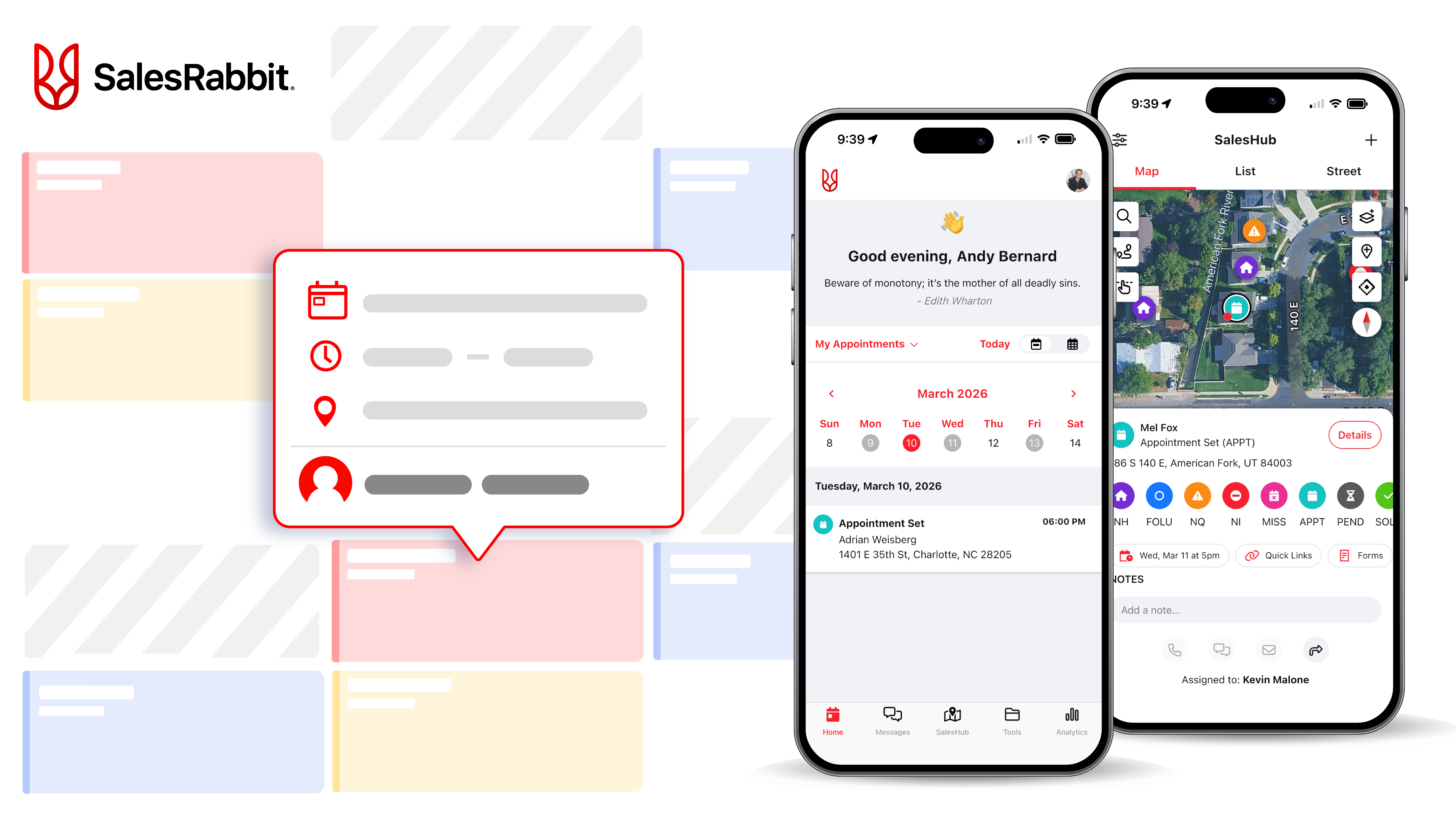
Advanced Appointment Management physically changes this workflow. The software syncs third-party calendars seamlessly and brings the scheduling process inside the platform. It turns a clumsy, trust-breaking handoff into an automated baton pass.
Forcing the Notes Before the Booking
The handoff process starts at the door. Setters need to pass along vital context without breaking their workflow. Instead of hoping they remember to text the details later, the system physically requires them to log the homeowner’s specific objections, the current state of their roof, or the best place to park before it allows the appointment to be booked. The closer arrives fully prepared to sell.
Syncing the Actual Calendars
Accidental double-booking is the fastest way to burn a lead. The fix is simple: connect the scheduling tool directly to your reps’ actual Google or Outlook calendars. The setter only sees the closer’s real-time availability. When properly set up, booking two appointments for the same hour becomes technically impossible because of 2-way sync.
Controlling the Routing Path
Every sales team operates differently. Managers need total control over how a lead moves from the front line to the closer. You can configure the workflow to allow setters to hand-pick a specific closer they trust, or you can mandate an automated distribution system to keep the workload even across the board.
Killing the Manual Pipeline Updates
Manual pipeline updates drag down efficiency. Software should do the heavy lifting. The second the appointment is booked on the calendar, the lead status automatically flips to “Appointment Set.” Manual data entry isn’t required between steps, ensuring the pipeline is up to date.
Stop letting bad logistics ruin good leads.
👉 Learn more about Advanced Appointment Management.


